
Generational Trauma: When the Pain Did Not Start With You
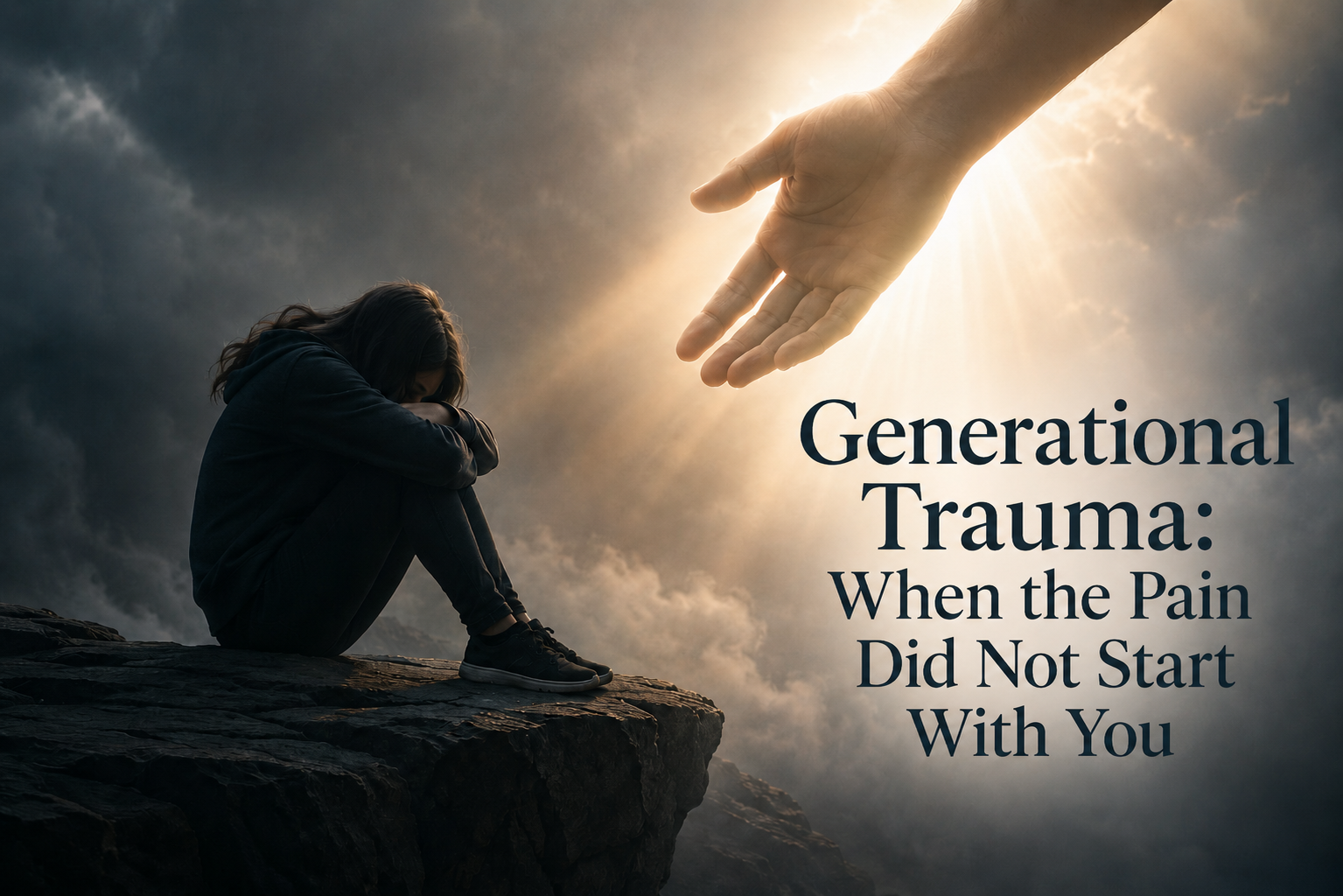
A warm, reflective look at generational trauma, how family patterns are passed down, and how awareness can help you begin to break the cycle.
Sometimes the way we respond to life does not begin with us.
The anxiety.
The people-pleasing.
The fear of conflict.
The emotional shutdown.
The need to stay busy.
The difficulty trusting.
The feeling that rest is unsafe.
The belief that you must keep everyone else okay.
These patterns can feel deeply personal, as if they are flaws in who we are. But often, they are not signs that something is “wrong” with us. They may be signs that something happened before us, around us, or to the people who raised us.
This is where generational trauma can be helpful to understand.
Generational trauma, sometimes called intergenerational trauma, describes the way emotional pain, survival patterns, fear, silence, shame or unresolved distress can be passed down through families. This does not always happen through words. In fact, it often happens through what is not spoken about.
A parent may never say, “I am scared,” but their child feels the fear in the home.
A grandparent may never speak about loss, but the family learns not to ask questions.
A caregiver may never explain their own trauma, but their nervous system teaches the next generation what feels safe and unsafe.
Children do not only learn from what adults say. They learn from what adults model.
They learn how emotions are handled.
They learn whether anger feels dangerous.
They learn whether sadness is allowed.
They learn whether rest is acceptable.
They learn whether love feels steady or conditional.
They learn whether needs are welcomed or seen as a burden.
If a child grows up in a home where emotions are dismissed, they may learn to hide their feelings. If they grow up around conflict, they may become hypervigilant and constantly scan for changes in tone, mood or facial expression. If they grow up with emotionally unavailable adults, they may learn to earn love by being helpful, quiet, successful or easy.
These responses are not weakness. They are adaptations.
They are the ways a child learns to survive in the emotional environment they are given.
The difficulty is that what once protected us can later limit us.
The child who learned to stay quiet may become the adult who struggles to speak up.
The child who learned to please everyone may become the adult who feels guilty saying no.
The child who learned not to need too much may become the adult who finds it hard to ask for support.
The child who learned that conflict leads to rejection may become the adult who avoids honest conversations.
This is how generational trauma can continue.
Not because families do not love each other. Not because people deliberately set out to cause harm. But because unhealed pain often repeats itself until someone has the awareness, support and safety to begin responding differently.
Many parents and grandparents were doing the best they could with what they had. Some came from times, cultures or family systems where feelings were not discussed. Survival may have mattered more than emotional expression. There may have been poverty, addiction, grief, violence, neglect, war, loss, shame, migration, discrimination or silence.
For some families, the message was:
“Keep going.”
“Don’t talk about it.”
“Don’t make a fuss.”
“Other people have it worse.”
“Be grateful.”
“Stay strong.”
“Don’t bring shame on the family.”
These messages may have helped people survive. But survival is not the same as healing.
When pain is not processed, it can become a pattern. When feelings are not named, they can become family rules. When needs are repeatedly ignored, people may come to believe they do not deserve care.
Breaking generational trauma does not mean blaming everyone who came before us.
It means becoming curious.
It means asking, gently:
“What did I learn about emotions?”
“What did I learn about love?”
“What did I learn about conflict?”
“What did I learn about rest?”
“What did I learn about my needs?”
“What patterns have I inherited that no longer serve me?”
This kind of reflection can be painful, because it may bring grief. Grief for what you needed and did not receive. Grief for the younger version of you who had to cope alone. Grief for the adults before you who may also have been wounded and unsupported.
But awareness can also be freeing.
Because once you can see a pattern, you have more choice in how you respond to it.
You may begin to notice when you are people-pleasing instead of being honest.
You may notice when you are shutting down because conflict feels unsafe.
You may notice when you are overworking because rest feels uncomfortable.
You may notice when you are apologising for having needs.
You may notice when your body is reacting to the past, even though you are safe in the present.
This is not about changing everything overnight. Healing rarely works like that.
It often begins with small, compassionate moments of interruption.
Pausing before saying yes.
Naming what you feel.
Letting yourself rest without earning it.
Allowing a boundary to feel uncomfortable without taking it back.
Speaking to yourself with more kindness.
Reminding yourself, “This reaction makes sense, but I have choices now.”
Breaking generational trauma can be quiet work.
It may not look dramatic from the outside. It may look like one honest conversation. One boundary. One apology. One moment of emotional awareness. One decision not to pass the same shame forward. One child being allowed to feel what you were never allowed to feel.
And that matters.
Because when one person begins to heal, the pattern begins to shift.
You may not be responsible for the pain passed down to you, but with support, awareness, and compassion, you can begin to decide what you carry forward.
You can honour the people before you and still choose differently.
You can understand their pain and still protect your peace.
You can love your family and still name what hurt.
You can be grateful for what they gave you and still grieve what was missing.
Healing generational trauma is not about becoming perfect.
It is about becoming more conscious, more compassionate and more connected to yourself.
It is about recognising that some of your patterns were once protection.
It is about thanking them for helping you survive.
And it is about gently learning that you do not have to live in survival mode forever.
The pain may not have started with you.
But healing can begin with you.
You matter!!!