
Why Do People Drift Apart? The Relationships That Change Along Life’s Journey
How Personal Growth, Boundaries and Changing Direction Can Reshape the People We Invite to Our Table
In the therapy space, I often talk about journeys.
Why do friendships drift apart, even when nobody has done anything obviously wrong?
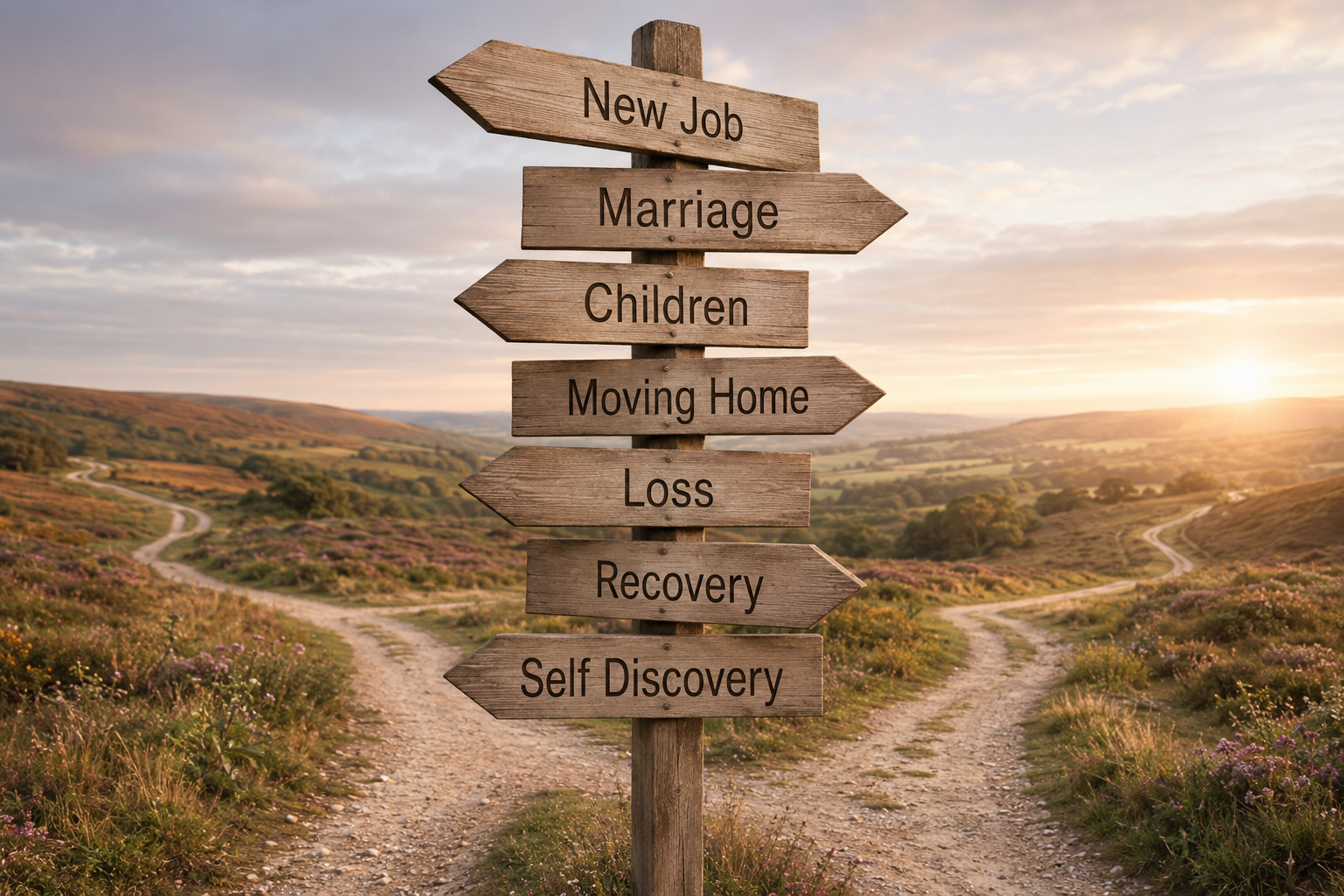
Perhaps part of the answer is that life isn't just one journey, but hundreds upon hundreds of emotional, mental, and physical journeys along the way.
We journey through relationships, parenthood, loss, work, recovery, changing health, self-discovery, and different versions of ourselves.
Some journeys are chosen. Others begin before we feel ready.
And none of them happens entirely alone. People travel beside us. Some remain for many years. Others join us for a particular stage, lesson, experience or version of who we were at the time.
The People We Invite to Our Table
As adults, we have some choice over the people we invite into our lives.
I sometimes think of this as choosing who we allow to sit at our table.
The people at that table should complement our lives, not complete them. They do not need to agree with everything we say or make life endlessly easy. Healthy relationships can include different opinions, difficult conversations and occasional disappointment.
But there should be a balance.
A feeling of give and take.
Space for both people to speak and be heard.
An interest in each other’s lives.
Genuinely celebrating one another without everything becoming a comparison.
A relationship will not always be perfectly equal. Sometimes one person needs more support because they are struggling. Healthy balance isn't about measuring every phone call, favour, or act of kindness.
It is about recognising whether care, interest, respect and effort can move in both directions over time.
Your Oldest Friend Is Not Always Your Closest Friend
We may believe the person we have known the longest should automatically be the person closest to us.
But shared history and present closeness are not always the same thing.
An old friend may know stories about who we were at school, the mistakes we made and the experiences we shared. That history can be deeply valuable.
A close friend knows who we are now.
They care about the person we are becoming, not only the version of us they remember. We can speak honestly with them, show vulnerability and express our needs without feeling that we must return to an old role.
Sometimes our oldest friend remains our closest friend.
Sometimes they do not.
Neither erases the history or means the relationship wasn't important. It may simply mean that the relationship has changed as both lives have moved forward.
Self-Discovery Can Change the Relationships Around Us
When we begin a journey of self-discovery and greater awareness, the people around us are not necessarily travelling in the same direction or at the same pace.
We may begin noticing patterns that we could not see before. This part can be difficult.
We may start setting boundaries.
We may stop automatically saying yes.
We may question expectations we have carried for years.
We may no longer laugh something off when it hurts us.
We may begin speaking more honestly instead of keeping quiet to maintain the peace.
These changes can feel positive and necessary to us, but they can be uncomfortable for people who were familiar with the older version of the relationship.
A relationship built around us always helping may feel different when we begin asking for support too.
Someone who benefited from our having few boundaries may struggle when we start using them.
A friendship that relied on us staying quiet may feel unsettled when we find our voice.
Unfortunately, not everyone will be happy to see someone else grow.
That can be painful, especially when we hoped the people closest to us would celebrate our progress.
But another person’s discomfort with our growth may say more about what the change brings up within them than it says about us.
Our growth can act like a mirror. It may remind someone of choices they have not made, boundaries they struggle to set or changes they are not ready to consider.
That does not make them a bad person.
It also does not mean we have to make ourselves smaller so they can remain comfortable.
Family, Friendship and Boundaries
We are given our family. For the most part, we choose our friends.
Family relationships often carry years of history, expectation, loyalty and roles that began before we were old enough to question them.
For many of us, family members are allowed to push far more boundaries than we would ever accept from a friend.
We may excuse behaviour because “that is just how they are.” We may feel guilty for saying no or worry that protecting ourselves means we are rejecting the whole family.
Boundaries within families deserve a blog of their own, and perhaps that is one for another day.
But being related to someone does not mean that our feelings, needs or limits stop mattering.
As adults, we can choose who we accept into our lives and who continues to have a place within them. We are allowed to decide how close a relationship feels safe or healthy enough to be.
Distance does not always mean punishment, anger, or a dramatic ending. Sometimes it simply helps us protect our well-being.
Why Friendships Change Over Time
Not every relationship ends because someone did something terrible.
Sometimes life changes.
People move, become parents, begin new relationships, change careers or develop different priorities. Interests change. Values become clearer. The routines that once held a relationship together disappear.
Two people can care about each other and still find themselves travelling in different directions.
There can be sadness in that.
A quiet ending can still feel like a loss. We can miss someone while understanding that the relationship no longer fits in the same way. We can appreciate what we shared without forcing it to remain exactly as it was.
And sometimes paths cross again.
People can reconnect years later with new understanding, different priorities and more awareness. A relationship that could not continue in one season may find a different place in another.
There are no guarantees. But not every separation needs blame or bitterness.
Pause and Notice
Take a moment to consider the people currently sitting at your table.
Do these relationships have a healthy balance of giving and receiving?
Can you be yourself, or are you still playing an old role?
Can the people around you celebrate your growth?
Are you holding onto someone because the relationship remains meaningful, or simply because you have known them for a long time?
Is there anyone you need to move closer to, create some distance from or gently release?
People can matter deeply and still move away from us.
A relationship can change without becoming a mistake.
Our directions may separate, and our paths may cross again one day.
Life keeps moving, and so do we.
The people at our table may change as we grow. What matters is that there is room at that table for honesty, respect, care, balance and the person we are becoming.