
 Image 1 of 5
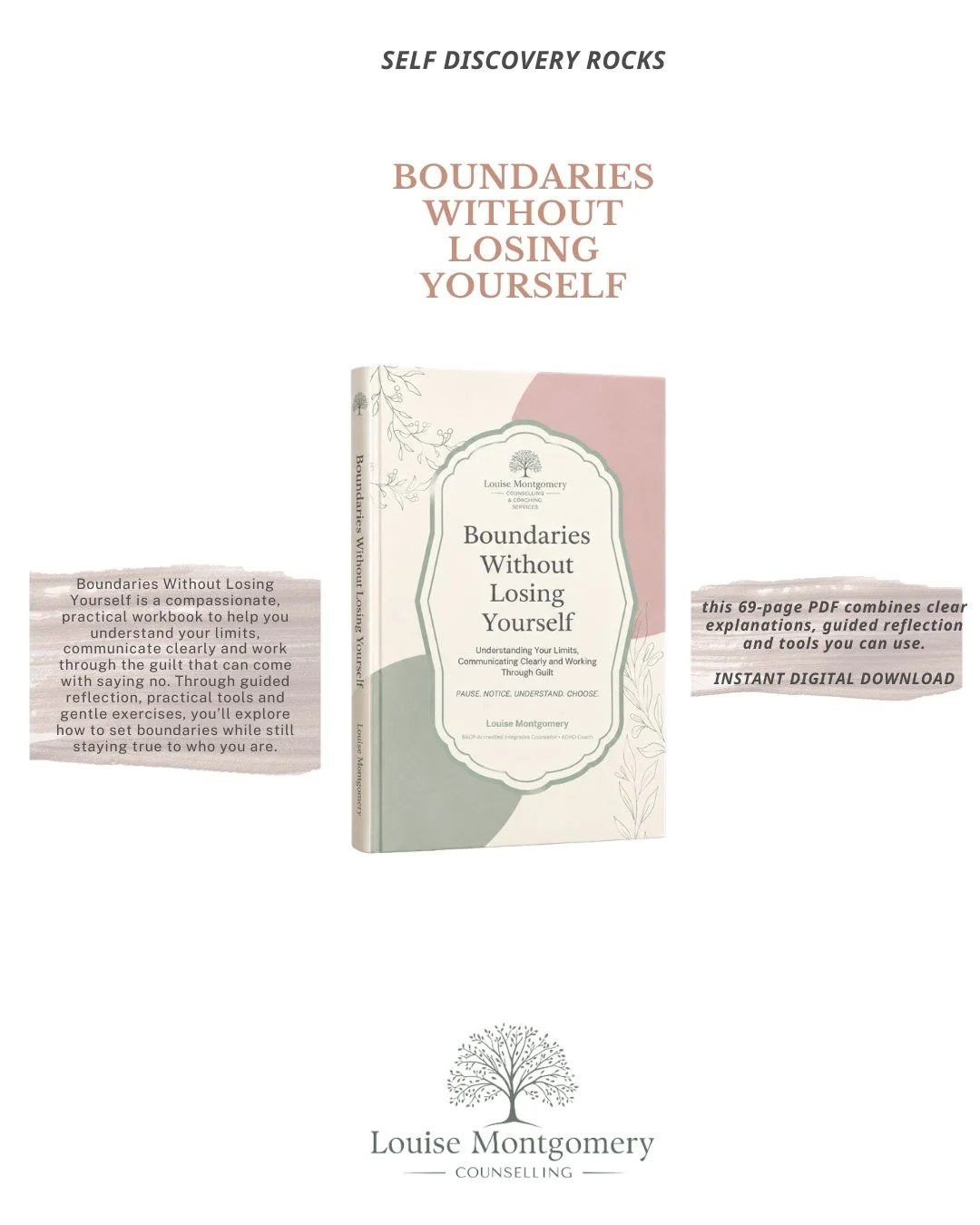 Image 2 of 5
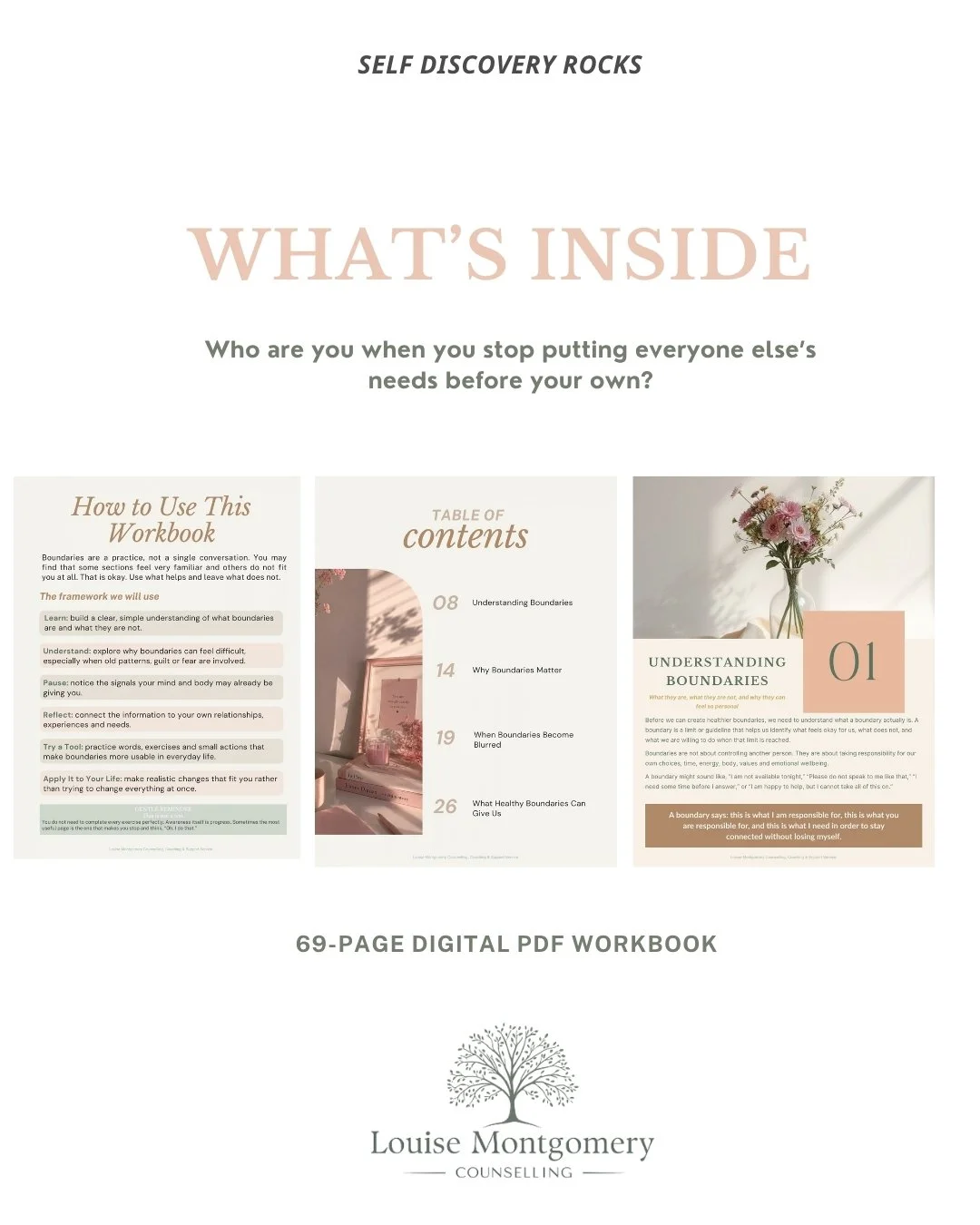 Image 3 of 5
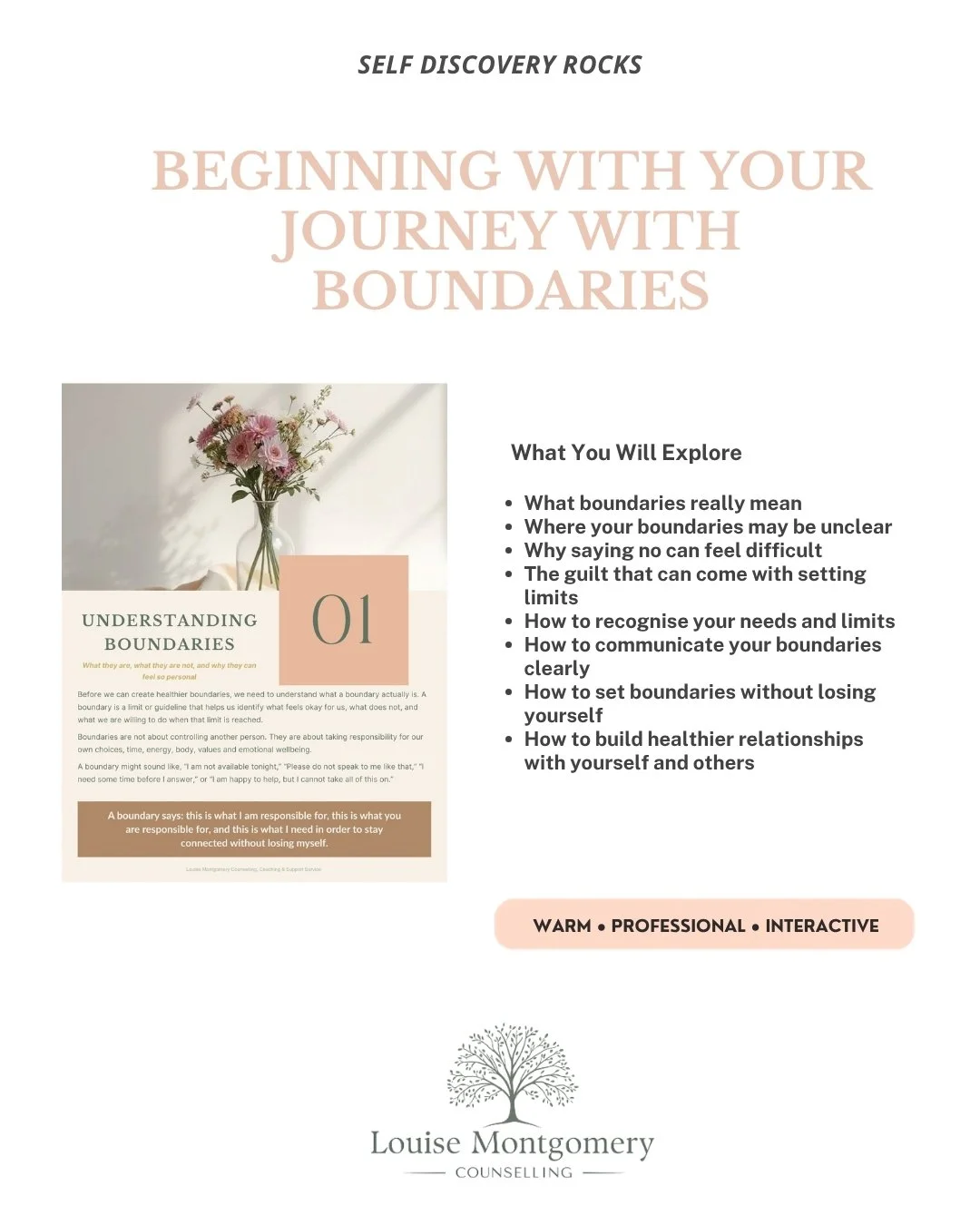 Image 4 of 5
 Image 5 of 5
Understanding your limits, communicating clearly and working through guilt
You say yes. Then wish you hadn’t. You finally say no. Then spend hours worrying about it.
Knowing you need a boundary and feeling able to set one can be two very different things. Especially when you are used to keeping the peace, being dependable or putting other people’s comfort before your own.
Boundaries Without Losing Yourself is a compassionate, practical workbook to help you understand your limits and practise expressing them in ways that feel like you.
Created by Louise Montgomery, a BACP-accredited integrative counsellor and ADHD coach with over 25 years of mental health experience, this 69-page PDF combines clear explanations, guided reflection and tools you can return to.
What you will explore
- Why saying no feels difficult: explore people-pleasing, familiar roles and the fear of disappointing others.
- Where you need clearer limits: reflect on boundaries with family, friends, work, money, digital life and yourself.
- How to find your words: use adaptable scripts and a boundary-building exercise to communicate clearly.
- What happens afterwards: prepare for guilt, second-guessing and the urge to overexplain with an After Boundary Plan.
- How to put insight into practice: work through a boundary audit, values exercises and four weeks of gentle boundary practice.
- What belongs to you: explore the difference between what you control, what you can influence and what you may need to release.
Make room for your needs, too
You do not have to become less caring to have boundaries. You can be warm, compassionate and clear about what works for you
Use this workbook at your own pace. Start with the situation that feels familiar, revisit an exercise or practise one small change.
Download Boundaries Without Losing Yourself and begin with one boundary that makes room for you.
These printables are supportive self-care tools and do not replace individual therapy. Take your time, use what feels helpful and seek individual support when you need it.